Friday, August 16, 2013

Pathiri(Rice Flour Chapathi)

It was the summer of '65. The place was Shimoga where my only sister who is a doctor, married and settled down. I was in 3rd standard and was on summer vacation. In the old fashioned kitchen over the firewood flame, Rice Flour Bhakris were being roasted and in a kadai, Jhunka was being prepared. Bhakri and jhunka is a staple combo breakfast for the people settled in the Uttar Kannada and Belgaum districts. My Brother in Law's family roots are in Sirsi and the good ladies who came down from Sirsi and Sagar were happily preparing a tasty wonderful breakfast for the hungry boys and girls who were sitting aside and watching the magical hands rolling the bhakris, roasting them and stacking them!
Pathiri with Chana Roasted Masala Curry
Pathiri(Pathir) has its origin in Kerala and it also resembles Rice Flour Bhakris to a great extent. It is a staple food in Northern Kerala where Mapillas have concentrated. The popular combination is Pathiri with Mutton Curry or Kadala Curry(Chick Pea Curry). Though this also resembles Coorgi Akki Rotti to a great extent, Coorgi Akki Rotti is made with steamed left over rice and this is made using the special pathiri powder.
Pathiri with Chicken Pulimunchi
A healthy nutritious alternative to parathas or chapathis, Pathiri is a tasty treat for the entire family. We tried it mostly with Chicken Pulimunchi and Chana Curry with roasted grated Coconut(Soi Bhaajjunu Ghashi). Those who eat pork can eat this with the Coorgi specialty Pandi Curry and this also goes well with a variety of North and South Indian curries.

We get Pathiri Powder in major retail stores here in Mangalore. It is finer than the normal rice powder and pathiris come out silky smooth with this powder. The process of making pathiri is simple but needs a little practice. Unlike the rice flour Bhakri of Uttar Kannada district which is made by processing rice flour in boiling water, pathiri  powder is mixed with hot water and kneaded to a soft dough. Then it is rolled between two sheets of plastic or aluminum and roasted(Baked) without adding any oil or ghee till it puffs and is slightly golden in clolour. Please follow the instructions on the pack for good results.

Ingredients:
Pathiri Powder - 1 cup
Hot water - 2 cups or more
Salt - To taste

Method:
Mix pathiri powder with 1 cup of hot water and salt to taste.
Knead well to a soft dough, adding little by little water as needed.
Make Egg size balls, place the balls between two sheets of plastic paper and press with the pathiri press or by keeping the sheets on a rolling board and pressing with another.
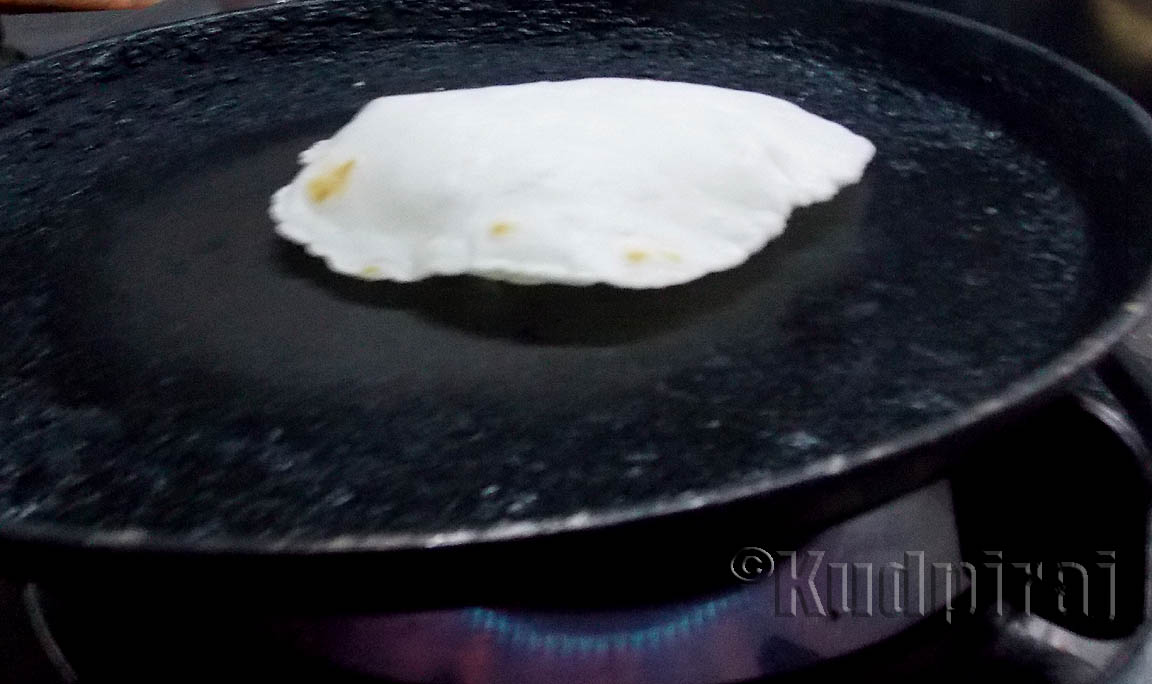
On hot tawa, roast the pathiri on both sides slightly, press with a towel on the edges, so that the pathiri puffs up.
Roast till golden on both the sides and wrap in a cloth to retain warmth and softness.
Serve hot with curry of your choice.


Wednesday, August 14, 2013

Happy Independence Day!

Wishing all the readers and well wishers of Kudpiraj's Garam Tawa
Happy 67th Indian Independence Day!

Monday, August 05, 2013

Aambe Saat(Maambala) - Poor Man's Rich Candy

Aambe Saat, Aam Saat, Maambala, Maamidi Tandra or Mango Jelly; call it any name you want. This is a sweet and sour energising dried Mango candy like delicacy available almost round the year.

During our childhood days, Aambe Saat used to come from local villages where they process mango pulp, spread it on palm leaf mats(Maandri) and dry in the hot summer sun in layers, roll them and sell in the market. Its cousin Pansaat or Jack Fruit Jelly was also available. These were poor man's Candies and were mostly relished suring the monsoon season in every house hold.


Now a days, undivided State of Andhra Pradesh produces excellent Aambe Saat which is inexpensive and can be preserved for a long time. I remember my friends from Hyderabad and Vijayawada getting this for me every year. It used to cost around Rs.150/- per kilo in the high season as far as I remember. According to sources, Maamidi Tandra is mainly made in Atryapuram village in Rajahmundry in traditional way with over ripe Totapuri mangoes.

This is a sample pic of Aambe Saat or Maamidi Tandra which I acquired a few years ago. The first look at the delicacy may remind one of any exotic sweet! Maamidi Tandra is much in demand and is exported to many countries today. Hence, the name poor man's candy is obsolete today, but the nostalgia that goes with it made me tag it thus!

Methi Murg

Methi Murg is a North Indian dish with an excellent aroma and taste. Fresh Methi(Fenugreek) leaves are cooked with marinated chicken pieces and other masala ingredients on slow heat, inviting the diner to gorge on a sumptuous meal.

Added cashewnut paste and brown onions sublimate the bitterness of the methi leaves and make the sauce succulent and finger licking good. We as youngsters were never fortunate enough to find this dish on the menu of Mangalorean restaurants, as those days fresh methi leaves were not easily available in the local market.

We made this yesterday for our brother's family who came down on a holiday from abroad and their young children gave a Hi5 for this curry. I am sure the followers of my blog will also love this.

Make sure that you have a stack of hot parathas/rotis/naan/phulkas or even ghee rice ready before you serve this item piping hot. Perfect maincourse dish for the monsoon or winter ambiance.


Ingredients:
1. Chicken pieces without skin - 500 Gms
2. Lemon - Half
3. Turmeric powder - 1/2 Tsp
4. Black or White Pepper powder - 1/2 Tsp
5. Salt - To taste
6. Curds - 1 Tablespoon
7. Ginger Garlic Paste - 1 Tsp
8. Brown Onion Paste - 1 Tsp
9. Chopped onion - 1 medium
10. Tomato puree - 1 Tablespoon
11. Red Chilli Powder - 1 Tsp
12. Jeera Powder - 1/2 Tsp
13. Dhania Powder - 1/2 Tsp
14. Garam Masala Powder - 1/2 Tsp
15. Cashewnut paste - 1 Tbsp
16. Methi Leaves - A Handful chopped and blanched
17. Refined Oil or ghee - 1 Tbsp
18. Brown Onion - 1 Tsp(Optional)

Method: 
Marinate chicken pieces with ingredients 2 through 6.
Heat oil in a vessel, fry chopped onions till golden. Add Ginger garlic paste, brown onion paste and fry till oil leaves the sides.
Add Tomato puree and the dry powders except garam masala powder and fry till raw smell disappears.
Now add chicken pieces with the marinade and the methi leaves.
Cook till chicken is tender.
Now add cashewnut paste and garam masala powder. Mix well and simmer for 5-10 mins.
Garnish with optional brown onion.

Serve hot garnished with lemon wedges, with roti or ghee rice.

Sunday, August 04, 2013

‘Aatidonji Dina’ Unique Monsoon Festival of Tuluvas

Aati Kalenja pic by: Ram Naresh Manchi
This is an excerpt from my articles and pictures on ‘Aatidonji Dina’ or a day in Aati month celebrated at Pilikula Heritage Village in the years 2008 and 2009.

Aati(Aashaad)is the month during monsoon season when heavy downpour of rains incite enthusiasm among the hard working Tuluvas of the undivided Dakshina Kannada districts of Karnataka state. They indulge in farming, rain sports and cultural activities with a wide spread of monsoon delicacies to greet the month that ensures their well being.
On Aati Amavaasye(New Moon Day), Tuluvas prepare and drink ‘Pale Ketthe Kashaaya’, a medicine that clears many ailments of the digestive system, purifies blood and builds up immunity according to belief.


‘Aati Kalenja’ the folklore of Tuluvas is the main attraction during the Aati month now confined to rural places, and not many urban dwellers get a chance to watch it now a days due to modernisation. Normally adolescent children are prepared with typical dress made of palm and tender areca leaves, their faces painted and a drummer goes along with the Aati Kalenja singing ‘Paaddana’ or folk songs while the Kalenja dances in a front and back slow motion rotating the umbrella made of coconut leaves. During my younger days, I have seen them every year and women mostly used to accompany them with the drum and singing.


Rains greet the well attended gathering at Pilikula Heritage Village as ‘Aatidonji Dina’every year as Dr Vamana Nandavara, the man in charge of the Heritage Village at Pilikula takes the pain to arrange a food festival showcasing Tuluva delicacies within the Gutthu House.


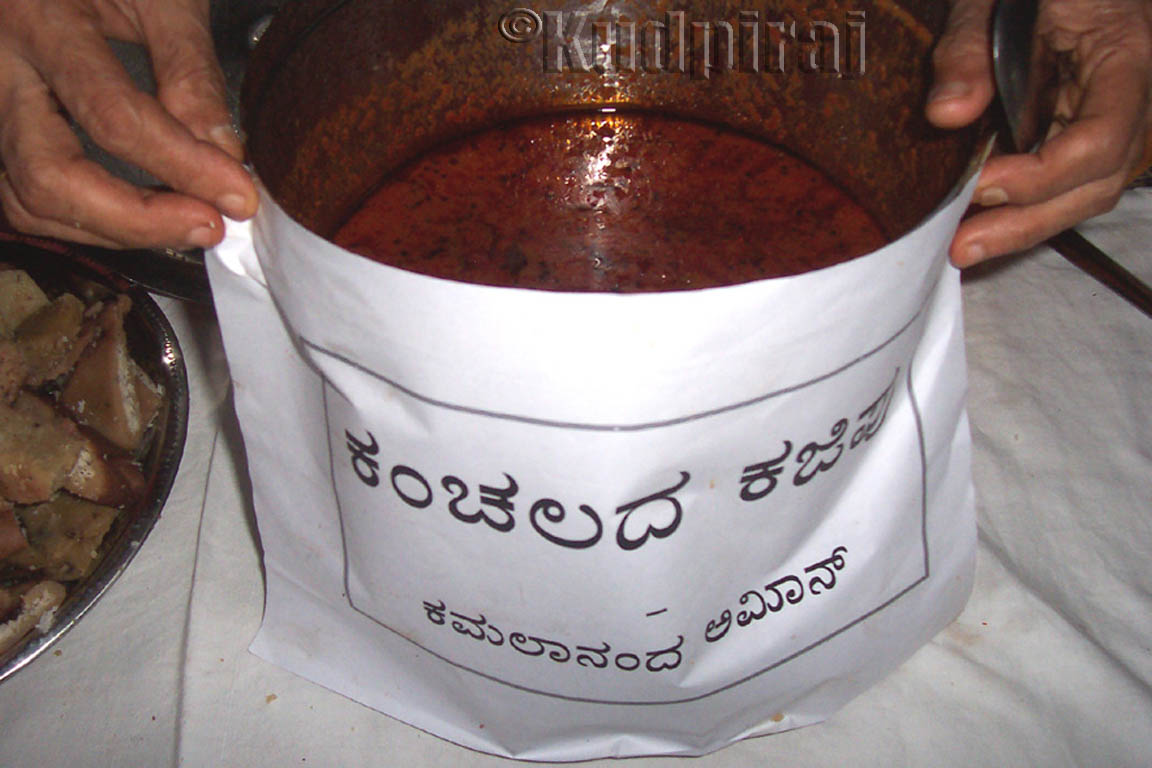
Food specialties included Aritha Pundi, Gujjeda Happala, Thevuda Chutney, Kudutha Saar, Thetlada Kajipu, Uppad Kukkuda Chutney, Nurge Thoppu Ambade, Kudutha Chutney, Kanile Padenji Ghasi, Thekkareda Adye, Pathrode, Manjal Iretha Gatti, Saarnadye, Kanchalada Kajipu, Pelakaayida Gatti, Pelakaayida Gaari, Mambala and a variety of Kashayas that tickle the taste buds of connoisseurs.


Enthusiastic Ladies Group prepares and presents the ‘Aati’ food specialties. The two consecutive years of Aatidonji Dina went by fast enough but the taste of goodies that we tasted there linger on forever!

LinkWithin

Related Posts Plugin for WordPress, Blogger...

Image Copy Control