Kundapur in undivided South Kanara District was a small town in the Fifties. This town was the gateway for travellers from Southern Mangalore and Kerala visiting places of pilgrimage like Kollur, Kumbhanshi and Shirali. Road communication was not prominent, National Highway was not built, bridges were not built across the rivers that led to this town from the Southern major town Mangalore, people crossed the rivers by boat and reached Kundapur spending over 5 hours! Shorter direct route was via Someshwar at the foothills of Agumbe Ghat. This is what I am given to understand from my parents when I was young.
Well, I am not going into History of Kundapur, nor am I trying to discuss geography of South Kanara District here. I'm just trying to highlight this small town that has grown big over the years with cultural activities like the world famous folk dance drama art 'Yakshagana', the town that has given thousands of culinary experts who have rooted the world over serving fantastic Udupi style breakfast, lunch and dinner. Kundapur also has given us a world famous dish called 'Chicken Ghee Roast'.
How on earth a dish from Kundapur reach global level today? What makes this dish so popular? Who first made and served this dish in a restaurant? What goes into it, and how can we make this dish the unconventional way. These are the points I am going to discuss here based on the information I collected from some of the contemporaries.

It was year 1956 when Thejappa Shetty hailing from a Bunt family decided to start a restaurant serving only lunch to satisfy the hungry people coming from the Southern coastal towns. He started Shetty Lunch Home in a small way with limited dishes like Fish Curry, Fish Fry, Chicken Sukkha, Kori Rotti, Kundapur Koli Thalna or the local specialty Kundapur Chicken.
Eventually he added many specialties formulated by the local chefs like Fish Naked Masala Fried and Chicken Ghee Roast. Chicken Ghee Roast was a superhit, and its aroma loaded with pure spices and pure ghee spread all over and the dish travelled from Kudapur to Mangalore and landed in Thejappa Shetty's newly opened branch in Mangalore, Anupama in Hotel Usha on Balmatta Road. Here the dish got its popularity and many local restaurants started making the dish but not quite like how Thejappa Shetty's restaurant made it. There was a time in the Sixties and the Seventies when people from Mangalore went to Kundapur just to taste the delicacies at Shetty Lunch Home. A stopover for lunch was mandatory for most of the non vegetarians travelling to and from Bombay and Goa. Though Kundapur and Mangalore are 90Kms apart, the undivided South Kanara District was popularly known as Mangalore District in other parts of the old Mysore State, and thus we proudly and rightfully call this dish as Mangalorean delicacy!
The ingredients that go into the dish was a secret and after Thejapa Shetty passed away, his sons Mohandas and Ravi continued the tradition by running the restaurant in Mangalore while original one at Kundapur was managed by their cousins. The same taste and aroma lingered on for many years, when one day in the late Nineties Anupama on Balmatta Road had to close down due to lease period getting over. Then Mohandas Shetty moved over to Abhiman Residency near Bunts Hostel Karangalpady and started Anupama Restaurant there. Thus the trend continued. Now Anupama's Shetty Lunch Home has reopened in Hotel Usha building Balmatta Road, where you can taste the authentic ghee roast today with the magic touch of Shetty Lunch Home Kundapur. Ravi Shetty has opened a chain of restaurants in Bangalore with this and many other delicacies under the name 'Coast to Coast'. Shetty Lunch Home also functions in RT Nagar Bangalore, where you can find the original Chicken Ghee Roast.
Though Chicken Ghee Roast is the signature dish of Late Thejappa Shetty at Shetty Lunch Home Kundapur and Hotel Anupama was responsible for spreading its aroma the world over, today many restaurants make this dish as good as Anupama. Almost every small and big restaurants have this dish on their menu! The reason is globalisation of the masala and the recipe for making it. There is this Kundapur Masala Powder that's the main condiment that is used to make this dish. In the Eighties when I was regular at Anupama in Mangalore, I had asked my personal friend Ravi Shetty many times about the formula of the masala that goes into Ghee Roast and Egg masala Fried dishes but he said, it's a secret which he himself didn't know!
Through certain source I got the know how of making Prawn Ghee Roast 8 years ago but that's a tedious process of roasting and grinding the masala ingredients. 25 years ago we came across Saranya Hegde's cook book 'Mangalorean Cuisine' that has the recipe how to make Kundapur Masala Powder but we never knew that the same masala is used to make Ghee Roast. We also made that masala powder and used it to make 'Uppu Motte'(Masala fried Egg) as per instructions and that didn't taste very good, as we missed out something.

Then one day in the year 2010 as I was discussing about food with a friend at a local restaurant, he said there's a fantastic chicken masala powder available at Sapna Stores Padubidri with which we can make number of dishes. I kept that in mind and next time as I passed by Padubidri, stopped over and bought the masala, which was nothing but Kundapur masala! For some time we were making just chicken curry for Kori Rotti and Kundapur Chicken using that masala. Then I thought why not try making masala fried fish with it, like the Uppu Motte we had tried, adding more tamarind and oil. We made Kane Fish Masala Fried and that was a success. Then I was confident and used the same masala to make Prawn Ghee Roast as well as Mushroom Ghee Roast. Just the other day our good neighbour Usha Attavar said, there's a better masala powder made by a home industry run by a lady in Kundapur and she gave us two packets got through her brother. Yes. This Coastal brand masala powder is much better than the one available at Sapna Stores. Purity of spices can be felt as we open the packs. They claim it as hand pounded.

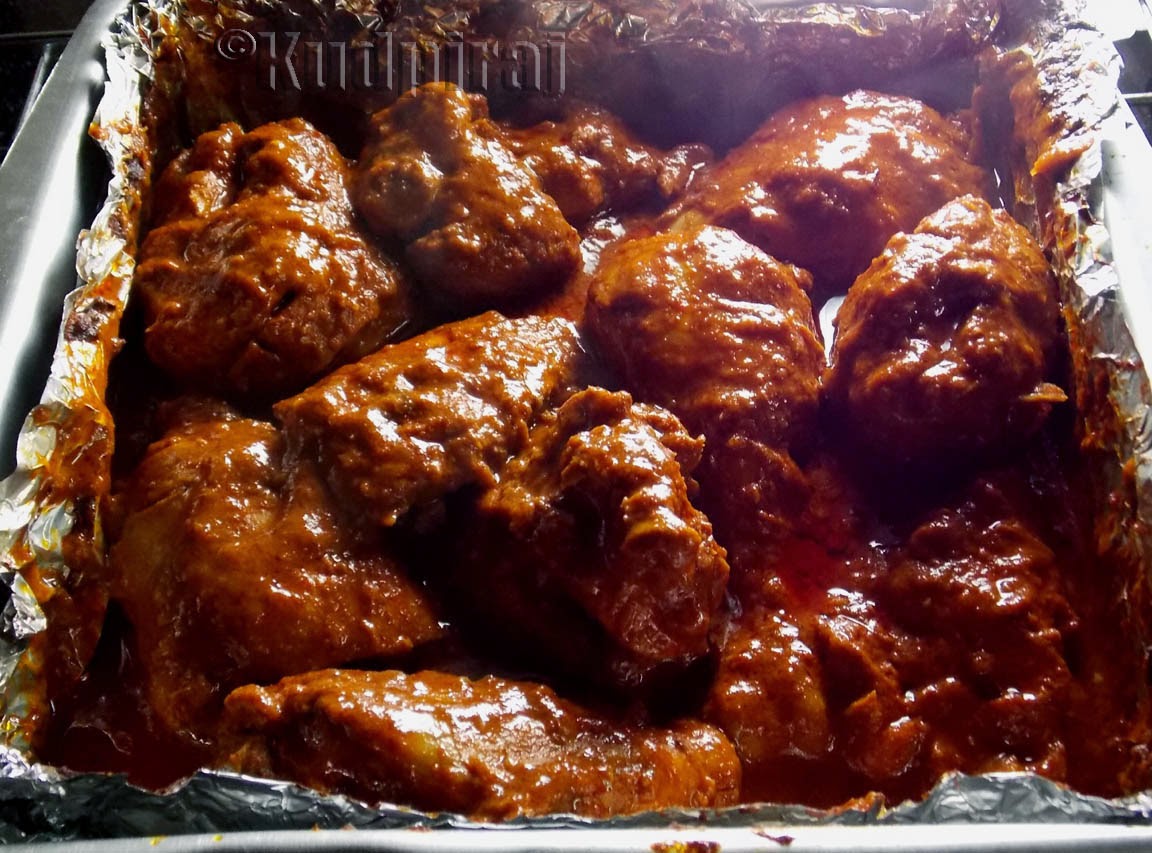
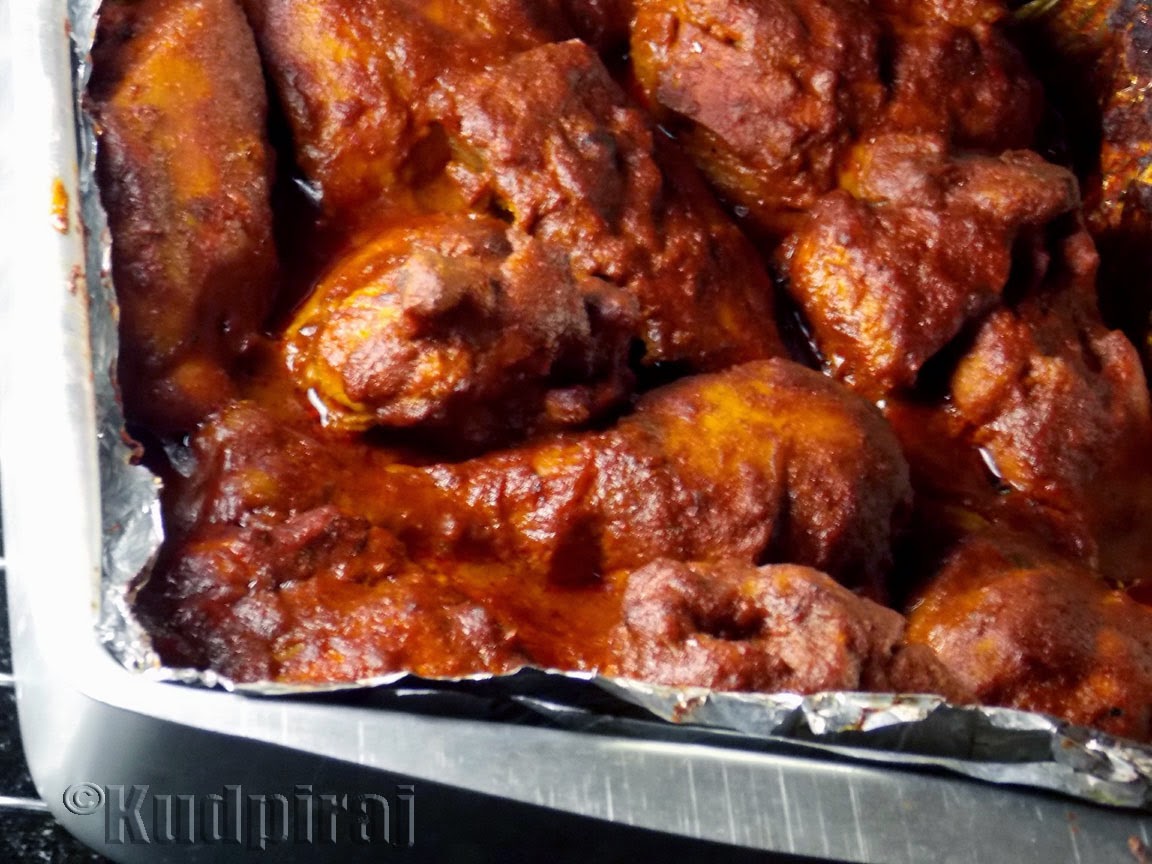
Here it is, Chicken Ghee Roast that we have tried many times with Kundapur Masala. I have added tamarind extract, salt, garlic paste, brown onion paste and plain curd to the masala and marinated the chicken for one hour in the fridge. But keeping in mind the health consciousness of our good followers and people settled abroad, I am following baking method that's not only less greasy but also easier than pan roast method. I added tips on how to make it wet type to go with rotis and dry type as a starter or side dish with main-course. Amount of ghee added here is almost 50% less than we normally add in pan roast method. However, people not used to baking may follow the pan roast method, which I have mentioned in the footnote. For those having difficulty in procuring Kundapur Masala Powder, here's the recipe for making the powder at home.
Whichever way you make it, Kundapur Masala Powder makes the lip smacking ultimate finger licking good Chicken Ghee Roast.




Ingredients:
Chicken breast and joints without Skin - 1.5 Kg cut into 10 pieces
Kundapur Masala Powder - 40 Gm(Approx. 8 Tsp)
Tamarind - 2 Tsp thick extract(Or a small lemon size ball in 20 ml water)
Plain Curd(Yoghurt) - 30Ml(2 Tbsp)
Brown Onion Paste - 4 Tsp(Sliced Onions shallow fried with little oil till brown and ground to a paste)
Garlic Paste - 1 Tsp
Salt - 1.5 level Tsp(Approximately)
Clarified Butter(Desi ghee) - 50Ml(Add more if you like)
Method:
Wash and drain chicken pieces, put gashes and keep aside.
In a bowl, mix curd with Kundapur masala powder, salt, garlic paste, brown onion paste and tamarind extract.
Apply the paste over the chicken pieces and marinate in the fridge for 1 hour.
Line a baking dish with aluminium foil and apply little ghee.
Arrange the marinated chicken pieces in the dish and pour the remaining marinade over them.
Drizzle 25ml ghee and brush the ghee evenly over the chicken pieces.
Preheat oven at 180C for 10 mins.
Keep the baking dish inside the oven and bake for 15 mins at 180C.
Remove and transfer on to a wire rack.
Flip the chicken pieces and drizzle remaining ghee over them.
Brush the ghee again and keep the dish inside for further baking at 220C for 15 mins.
By this time chicken pieces get tender and the masala gets well infused into the chicken.
Empty the chicken with the masala into a serving platter lined with plantain leaf and serve hot with lemon wedges and choice of salad.
This can be served as a starter dish or with phulkas or rotis.


Note:
1. If you want the chicken ghee roast to be more dry and served as a starter or with rice main-course, after the second baking, flip the pieces again, drizzle little more ghee and bake for another 5-10 mins till the pieces get well browned.
2. Those who prefer to roast the chicken directly in pan, choose a thick bottomed nonstick pan with lid, add 50 ml ghee in the hot pan and place the chicken pieces in it covered with lid and cooked on slow heat for 10-15 mins, then turned over, more ghee added and roasted further with lid open for 5-10 mins. Lastly roll the pieces in the masala carefully with wooden ladle so that the masala is evenly roasted and the chicken pieces are also uniformly brown.


