Raaju/Raaja is Mackerel fish in Konkani, Bangude in Tulu and Kannada. Perhaps the name was derived from King Fish, as King fish and Mackerel are close cousins. Gobboru is nothing but ash. The authentic Raaja Gobboru gets slightly burnt while cooking. I think our ancestors named the dish thus, because this curry is not too wet, rather dry and the slow dum cooking with charcoal cinders above and below the pot gives such an impression! Traditionally this should be prepared in earthenware pot on wood or charcoal fire with hot charcoal laid over the lid for even heat transmitted into the curry to almost bake the mackerels, while absorbing the flavours within the masala pretty well .
I have tasted awesome Raaja Gobboru prepared at my friends Kumble Vaman Nayak's home. Vaman's wife makes this perfectly. When I asked her the recipe few years ago, she just gave me a hint that it is made with almost the same masala as Mackerel Kothambari Methi Ghashi, but selection of fish and layering it with masala spread over each layer in the pot is very important.
My grandma(mother's mother) hailed from Kumble, and thus my mother inherited her cooking abilities. She used to make excellent Raaja Kothambari Methi Ghashi. Yet, she never had an idea what Raaja Gobboru was, or maybe she never tried that, since our family was pretty big with over 12 members, and some might not have liked dry curry made with fish those days!
Traditionally they cook fish on very slow heat for an hour almost, adding coconut oil from time to time in small quantities. That's what makes the dish so delicious and different from the conventional GSB curry Kothambari Methi Ghashi. Besides, we are adding oil while cooking fish in this curry, whereas for the other one, we are adding fresh oil after the fish is cooked. Some follow slightly different methods of cooking such as stuffing the whole fish with the masala or roasting the masala in oil first and then making layers with fish and cooking on slow fire. However, final cooking has to be done on slow heat for a long time.
Medium size Mackerel fish is cooked slowly on dum(Sealed pot) in a spicy tangy coriander and fenugreek seed coconut gravy in layers with abundant drizzle of fresh coconut oil. There are different recipes to make this, but I prefer the masala as per ingredients mentioned here below. You can also layer masala and fish, keep it in the oven at 180 C for 20-30 minutes and make it equally tasty. Only drawback here is, you may find it difficult to take the pot out of the oven from time to time, shake the contents and add oil, which is very essential!
This curry goes well with boiled red rice. Better fry some fish and savour along with this fantastic treat! A glass of cold buttermilk may wash the remaining traces of the curry down into your gastronomy, leaving you feel on top of the world!


Mackerel Fish - 1 Kg medium size(About 10 Mackerels)
Grated Coconut - 3 Cups(or 3/4 medium size coconut)
Red Short(Ramnadu) Chillies - 8-10
Red Long(Byadgi) Chillies - 8-10
Rock Salt - 1 1/2 Tsp(or table salt 1 1/4 Tsp)
Tamarind - Marble size ball
Coriander Seeds - 2 Tbsp
Fenugreek(Methi Seeds) - 1/2 Tsp
Coconut Oil - 4 Tbsp
Method:
Clean, wash and drain mackerels.
Cut each one into two pieces lengthwise.
Heat 1/2 tsp oil and roast chillies, followed by coriander and fenugreek seeds until a nice aroma emanates.
Powder in the mill and grind along with grated coconut, rock salt and tamarind into a smooth paste, adding just about 1 and 1/2 cup water.
Empty the masala paste into bowl and rinse the mixer jar with 1/2 cup water and reserve this water.
In an earthen pot or a thick bottom wide mouthed pan, drizzle 1 Tbsp coconut oil.
Spread 1/3 of the ground masala paste and arrange half the mackerel pieces in a radial arrangement(Resembling spokes of a wheel).
Top up with second layer of masala and arrange some more pieces over it and drizzle 1 Tbsp oil.
Top up with remaining masala paste and drizzle one more tbsp oil.
Keep on the gas flame, allow to heat up.
As soon as smoke starts to emit from the pot, keep a perforated plate underneath the pot, allow it to get red hot and then simmer gas.
Close the lid, keep some weight on the lid like a mortar or a stone to seal the pot and allow to cook on slow heat for 5-10 minutes.
Open the lid, shake the contents by lifting and rotating the pot in a swivel movement.
Drizzle one teaspoon oil, close the lid, keep the weight and allow to cook for another 10 mins.
Open the lid, shake the contents again, drizzle one more teaspoon oil and close the lid, replace the weight.
Cook for another 10 minutes. open the lid, drizzle remaining oil and mix by again shaking the pot.
Raaja Gobboru is ready.
Serve with steaming hot boiled red rice and choice of fish fry.


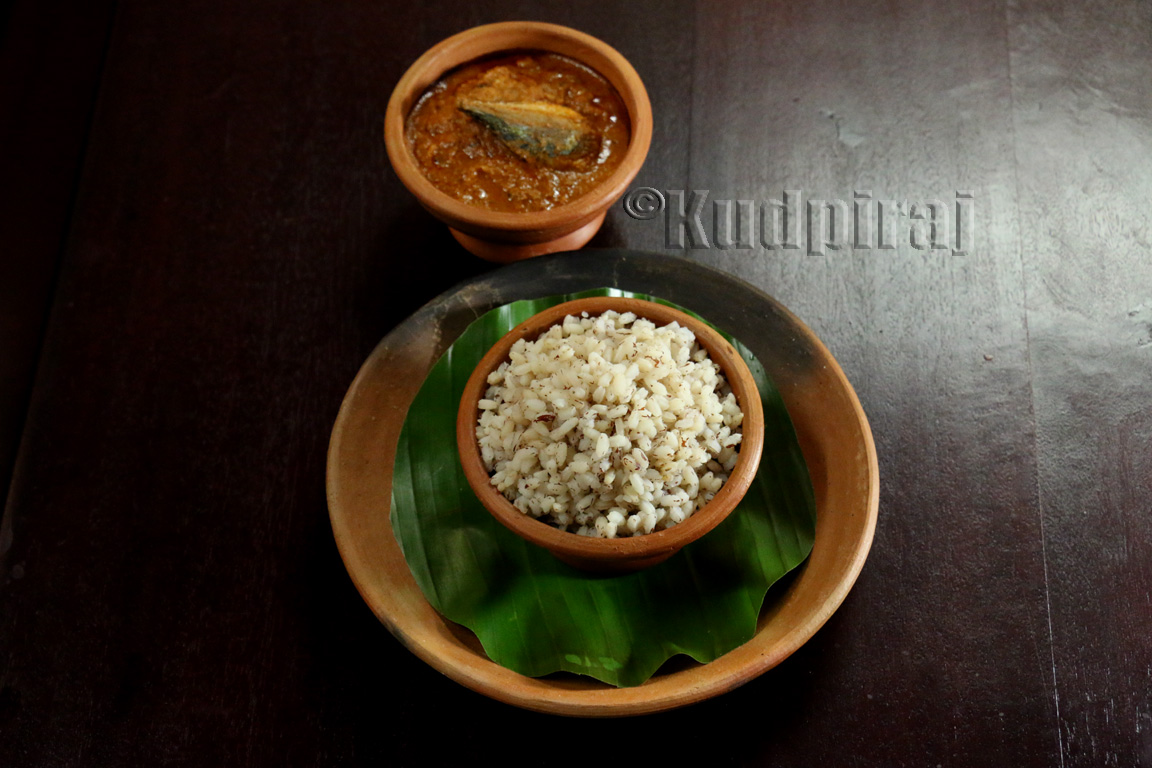

This curry is meant to be thick and dry, almost zero water added while cooking.
For better results, keep some red hot charcoal or burning embers over the lid while cooking on slow heat.
If you want the gravy slightly thin, add just 1/2 cup hot water, not more than that.
You can also add some chopped ginger, onion, green chillies and curry leaves while arranging masala and fish in layers.
You can add 1/2 tsp turmeric powder to the masala paste.
Since this curry is loaded with coconut, it tends to get stale faster.
Once you consume the fresh curry, keep the remaining portion in a fridge and reheat it in a microwave or on slow heat in a pot only when you want to consume it.