Showing posts with label Maincourse. Show all posts

Monday, September 14, 2015

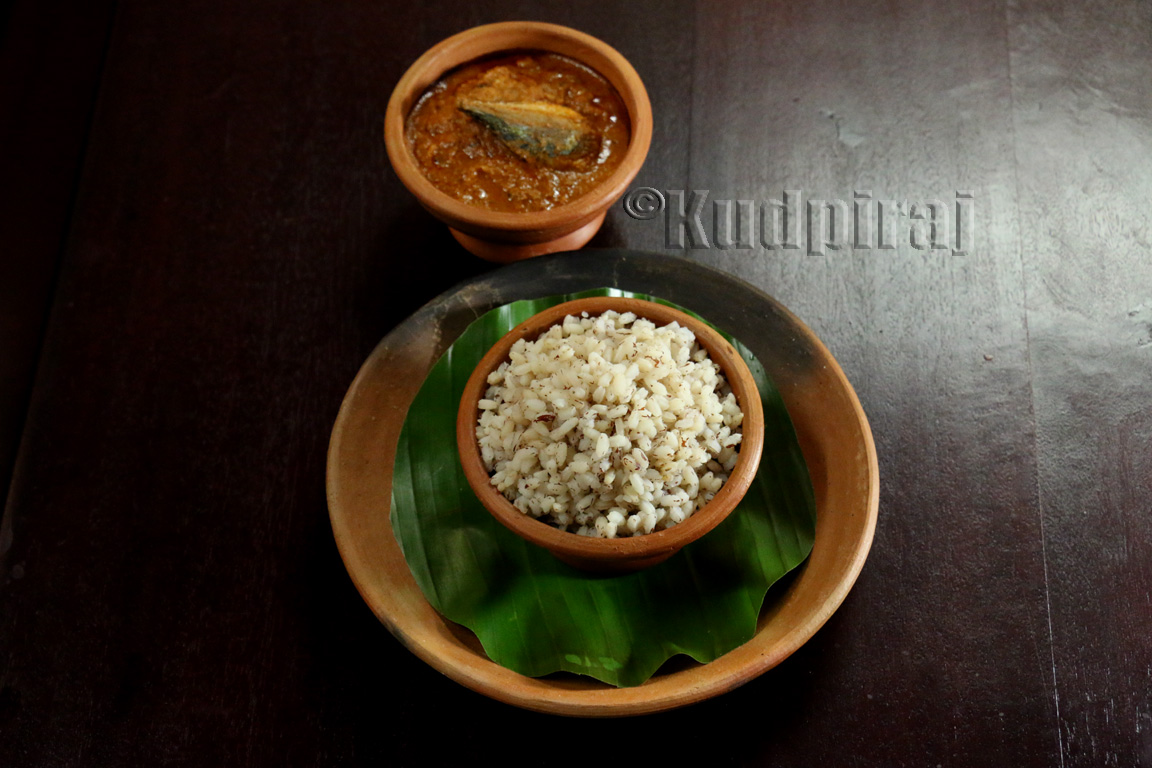
Raaja Gobboru(Mackerel Dry Curry)

GSBs settled in Northern Kerala, especially in and around Kumble are adept at making some of the most aromatic and delicious seafood preparations. Raaja Gobboru is one among them.

Raaju/Raaja is Mackerel fish in Konkani, Bangude in Tulu and Kannada. Perhaps the name was derived from King Fish, as King fish and Mackerel are close cousins. Gobboru is nothing but ash. The authentic Raaja Gobboru gets slightly burnt while cooking. I think our ancestors named the dish thus, because this curry is not too wet, rather dry and the slow dum cooking with charcoal cinders above and below the pot gives such an impression! Traditionally this should be prepared in earthenware pot on wood or charcoal fire with hot charcoal laid over the lid for even heat transmitted into the curry to almost bake the mackerels, while absorbing the flavours within the masala pretty well .

I have tasted awesome Raaja Gobboru prepared at my friends Kumble Vaman Nayak's home. Vaman's wife makes this perfectly. When I asked her the recipe few years ago, she just gave me a hint that it is made with almost the same masala as Mackerel Kothambari Methi Ghashi, but selection of fish and layering it with masala spread over each layer in the pot is very important. 

My grandma(mother's mother) hailed from Kumble, and thus my mother inherited her cooking abilities. She used to make excellent Raaja Kothambari Methi Ghashi. Yet, she never had an idea what Raaja Gobboru was, or maybe she never tried that, since our family was pretty big with over 12 members, and some might not have liked dry curry made with fish those days!

Traditionally they cook fish on very slow heat for an hour almost, adding coconut oil from time to time in small quantities. That's what makes the dish so delicious and different from the conventional GSB curry Kothambari Methi Ghashi. Besides, we are adding oil while cooking fish in this curry, whereas for the other one, we are adding fresh oil after the fish is cooked.  Some follow slightly different methods of cooking such as stuffing the whole fish with the masala or roasting the masala in oil first and then making layers with fish and cooking on slow fire. However, final cooking has to be done on slow heat for a long time.

Medium size Mackerel fish is cooked slowly on dum(Sealed pot) in a spicy tangy coriander and fenugreek seed coconut gravy in layers with abundant drizzle of fresh coconut oil. There are different recipes to make this, but I prefer the masala as per ingredients mentioned here below. You can also layer masala and fish, keep it in the oven at 180 C for 20-30 minutes and make it equally tasty. Only drawback here is, you may find it difficult to take the pot out of the oven from time to time, shake the contents and add oil, which is very essential!

This curry goes well with boiled red rice. Better fry some fish and savour along with this fantastic treat! A glass of cold buttermilk may wash the remaining traces of the curry down into your gastronomy, leaving you feel on top of the world!

Ingredients:
Mackerel Fish - 1 Kg medium size(About 10 Mackerels)
Grated Coconut - 3 Cups(or 3/4 medium size coconut)
Red Short(Ramnadu) Chillies - 8-10
Red Long(Byadgi) Chillies - 8-10
Rock Salt - 1 1/2 Tsp(or table salt 1 1/4 Tsp)
Tamarind - Marble size ball
Coriander Seeds - 2 Tbsp
Fenugreek(Methi Seeds) - 1/2 Tsp
Coconut Oil - 4 Tbsp

Method:
Clean, wash and drain mackerels.
Cut each one into two pieces lengthwise.
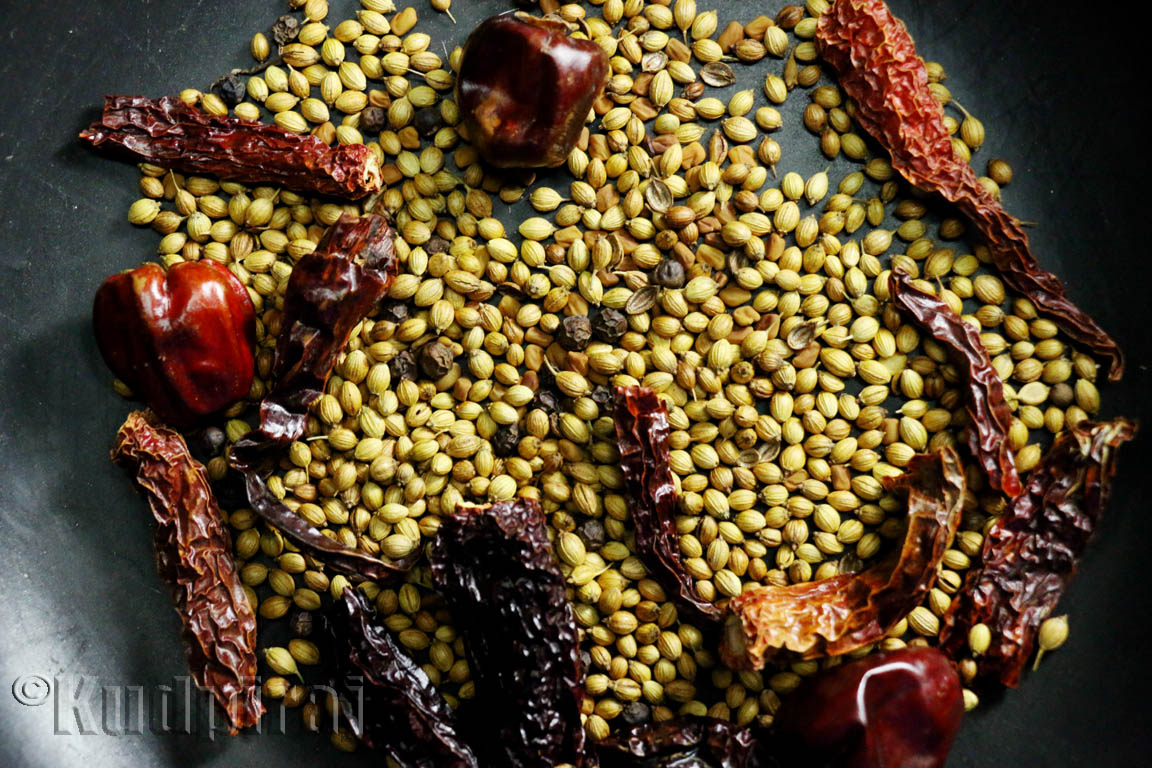
Heat 1/2 tsp oil and roast chillies, followed by coriander and fenugreek seeds until a nice aroma emanates.
Powder in the mill and grind along with grated coconut, rock salt and tamarind into a smooth paste, adding just about 1 and 1/2 cup water.
Empty the masala paste into bowl and rinse the mixer jar with 1/2 cup water and reserve this water.
In an earthen pot or a thick bottom wide mouthed pan, drizzle 1 Tbsp coconut oil.
Spread 1/3 of the ground masala paste and arrange half the mackerel pieces in a radial arrangement(Resembling spokes of a wheel).
Top up with second layer of masala and arrange some more pieces over it and drizzle 1 Tbsp oil.
Top up with remaining masala paste and drizzle one more tbsp oil.
Keep on the gas flame, allow to heat up.
As soon as smoke starts to emit from the pot, keep a perforated plate underneath the pot, allow it to get red hot and then simmer gas.
Close the lid, keep some weight on the lid like a mortar or a stone to seal the pot and allow to cook on slow heat for 5-10 minutes.
Open the lid, shake the contents by lifting and rotating the pot in a swivel movement.
Drizzle one teaspoon oil, close the lid, keep the weight and allow to cook for another 10 mins.
Open the lid, shake the contents again, drizzle one more teaspoon oil and close the lid, replace the weight.
Cook for another 10 minutes. open the lid, drizzle remaining oil and mix by again shaking the pot.
Raaja Gobboru is ready.
Serve with steaming hot boiled red rice and choice of fish fry.
Note:
This curry is meant to be thick and dry, almost zero water added while cooking.
For better results, keep some red hot charcoal or burning embers over the lid while cooking on slow heat.
If you want the gravy slightly thin, add just 1/2 cup hot water, not more than that. 
You can also add some chopped ginger, onion, green chillies and curry leaves while arranging masala and fish in layers.
You can add 1/2 tsp turmeric powder to the masala paste.
Since this curry is loaded with coconut, it tends to get stale faster.
Once you consume the fresh curry, keep the remaining portion in a fridge and reheat it in a microwave or on slow heat in a pot only when you want to consume it.

Thursday, September 10, 2015

Goan Prawn Curry

Goan seafood curries are pungent, full of aroma of freshly ground spices. Coconut/coconut milk is essential in making most of the Goan seafood curries. Goans also add kokum abundantly in curries, but the amount of kokum if added in excess, makes the curry too tangy. Other alternatives are traditionally adding tamarind or with the Portuguese favourite vinegar.

Goan Prawn curry is one such exotic dish, mostly relished with steamed rice. Similar masala is also used in making Goan fish curry. Goans call prawn curry with added coconut milk as 'Rosachi Kadi'. Here, rosu is coconut milk. 

I have tasted at least 3 kinds of Goan seafood curries. Though the ingredients vary from North to South Goa, main ingredients remain the same. Some add grated coconut masala as base to make prwan curry but many add just coconut milk to the ground spices. We have made Goan Prawn Curry twice so far. Both the times, we followed different recipes. 

First was Rosachi Kadi that we made following recipe from Femina magazine in the Nineties. In that, grated coconut is ground along with spices and then milk is extracted and prawns are cooked in that extract. The one presented here contains coconut based masala as well as added coconut milk. 

The pungency of the masalas, the tang of tamarind and the sweetness of coconut makes this curry very delicious. Prawns retain their tenderness when cooked in coconut milk. I recommend coconut oil for frying the masalas, because coconut blends well with coconut oil and seafood gets that heavenly aroma and taste when cooked with coconut oil. I have roasted the ingredients and also added some fenugreek(methi) seeds for better flavour, like we Mangaloreans do with other seafood curries.

Now is the season for prawns, and we got fresh big white prawns from the KFDC outlet near our home. You can also make it with shrimp, but big prawns are recommended. Don't forget to make boiled red rice and some fried fish or dry shrimp chutney to complete the meal. Choice of 'pick me up's can vary from Goan Feni to Kerala Kallu. In this recipe, I have given an easy method of making Kallu(coconut toddy) at home. 


Ingredients:

For marination:
Whole Big Prawns - 500 Gms
Turmeric Powder - 3/4 Tsp
Table salt - 1/3 Tsp(or to taste)

For the Masala paste:
Red Long(Byadgi or Kashmiri) Chillies - 5
Red Short Chillies(Ramnadu) - 3-4
Peppercorns - 1/2 Tsp 
Coriander Seeds - 4 Tsp 
Fenugreek(Methi) Seeds - 1/4 Tsp 
Grated Coconut - 1 cup, preferably fresh
Ginger - 1/2 Inch 
Garlic - 6 Cloves
Onion - 1 small, chopped
Tamarind - Chickpea size ball(or diluted vinegar 1 Tbsp)
Rock Salt - 1/2 Tsp(or table salt 1/3 tsp)
Thin Coconut Milk(or water) - 1 Cup or more

For the curry:
Coconut Oil - 2 Tbsp 
Curry Leaves - 1 Sprig
Onion - 1 small, chopped
Green Chillies - 2-3 cut diagonally
Thick Coconut milk - 2 Cups or 400 Ml 
Coriander Leaves(Optional) - A handful Chopped 

Method:
Shell, devein and wash prawns, drain and keep aside.
Marinate prawns with 1/4 tsp salt and turmeric powder for 15-30 mins.
Dry roast red chillies, coriander seeds, fenugreek seeds, peppercorns until a nice aroma emanates.
Grind along with grated coconut, ginger, garlic, one chopped small onion, tamarind and rock salt into a fine paste, using 1/2 cup(100 ml) thin coconut milk or water.
Heat oil in a wide mouthed earthen pot or saucepan.
Add curry leaves followed by one chopped small onion, and saute until onion turns golden.
Add the marinated prawns and fry until prawns are opaque.
Now add the ground masala paste and fry for 2 mins.
Add remaining thin coconut milk, green chillies, mix gently and cook for 3 mins on medium flame.
If you want the gravy thin, add more thin coconut milk or water.
Reduce the flame to sim and add coconut milk, stir well, check for salt and simmer for 2-3 mins.
Garnish with optional chopped coriander leaves.
Serve with steamed rice and fried fish.
Note:
Don't add thick coconut milk while the curry is boiling.
Don't boil the curry after adding the coconut milk.
Maintain low flame until coconut milk blends with the curry.
You can garnish the curry with chopped coriander leaves, but I prefer it as it is.

Friday, July 03, 2015

Paneer Butter Masala(Without Butter)

For pure vegetarians, paneer or cottage cheese is a delicacy, an alternative to eggs and chicken. Paneer Makhanwala or Paneer Butter Masala is the most popular North Indian gravy dish formulated by the Punjabis and made rich by the Mughals. The Punjabi verision of Makhanwala has heavy use of butter/cream while the Mughalai version has cashew rich gravy with added cream/butter.

Tomato puree is common among both the versions, and it gives the gravy a sweet tangy taste and  adds substance to the gravy. Makhanwala can also be made without added butter or cream.
Paneer Butter Masala without adding butter or cream was basically Meena's idea. Off the usual, she wanted to make a nice creamy dish without adding extra fat. Amount of oil that goes into this curry is very less compared to traditional butter masala/makhanwala. You must make this to believe that it tastes as good as the original Paneer Butter Masala they serve in dhabas!

The dish shown in the pictures has butter floating in it, for I love my makhanwala with lots of butter!


Ingredients:
Paneer - 200 gms cut into 1/2" cubes
Oil - 1 Tbsp
Ginger Garlic Paste - 1 Tsp
Onions - 150 gms finely chopped
Tomatoes - 150 gms  finely chopped
Coriander Powder - 1 Tsp
Red Chilli Powder - 1 tsp
Kashmiri Chilli Powder - 2 Tsp
Turmeric Powder - 1/4 tsp
Tomato Puree - 2 Tsp
Cashewnut paste - 2 Tsp
Salt - To taste
Kasuri Methi - 1 tsp
Method:
Heat oil in a pan and fry chopped onions with ginger garlic paste until onions turn golden.
Add chopped tomatoes and fry until tomatoes are mushy.
Add all the powders and fry for 1-2 mins.
Grind to a fine paste in the mixer.
Transfer the ground paste back into the pan and add tomato puree and cashewnut paste.
Fry until oil leaves the sides. 
Add cubed paneer and half cup water.
Bring to a boil, add salt to taste and simmer for 5 mins.
Finally sprinkle crushed kasuri methi and serve hot with choice of roti or rice accompaniment.
Note:
If you want the gravy to be rich, drop 50 gm butter into the hot curry.

Monday, June 22, 2015

Bread Fruit Manchurian

This is a rare exotic dish that I had first invented way back in 1991 when I invited couple of friends for dinner at our newly occupied flat in Attavar Mangalore. I got a big bread fruit from my friend Kumble Srinivas Nayak's garden then. After making a few traditional dishes, I told Meena, I shall experiment and make manchurian with the remaining piece. It turned out good and our friends were fascinated to get a taste of, perhaps the first Bread Fruit Manchurian in the world!
Those days I was not perfect with my Indo-Chinese cooking. Nothing turned out like restaurants like Nanking, Hao Hao and Ting Hao made those days. However, over the years I improvised the skills and made them exactly like they make in restaurants. This manchurian is also authentic, for the added brown onion paste makes it very tasty. Skipping cornstarch while deep frying or shallow frying is deliberate, because bread fruit has natural starch within, that makes the pieces crisp and dry while frying and also blends well with the sauces. 

Those who prefer wet type manchurian with sauce may add 1 Tsp cornstarch dissolved in 30 ml water along with soy sauce and tomato ketchup. I have shown the steps to make wet type manchurian in this recipe article.

Enjoy the exotic dish and please leave a comment, in case you and your family members like it.
Ingredients:
Bread Fruit - 250 Gms
Oil - For deep and shallow frying
Salt - To taste
White Pepper Powder - 1/2 tsp
Kashmiri Chilli Powder - 1 Tsp
Brown Onion Paste - 2 Tsp
Green Chillies - 2 finely chopped
Ginger - 1/2" finely chopped
Garlic - 6-8 cloves finely chopped
Dark Soy Sauce - 1 Tbsp
Tomato Ketchup- 1 Tbsp
Spring Onion bulbs - 4-6 finely chopped
Onion Shoot - 2-3 stalks chopped

Method:
Shave the outer green skin, remove the center core and chop bread fruit into 3/4" thick pieces.
Deep fry the pieces in hot oil till crisp and golden.
Drain and keep aside.
Heat 2 Tsp oil in a wok.
Fry chopped spring onion bulbs, ginger, garlic and green chillies on high flamne for 1 min.
Add brown onion paste, Kashmiri chilli powder and salt.
Fry for 2-3 minutes, sprinkling little water from time to time.
Add soy sauce and tomato ketchup and fry for 1 min.
Add 2 tbsp water and allow the sauce to sizzle.
Now add white pepper powder and drop the fried bread fruit pieces and roll them in the sauce to coat them well.
Keep stir frying on high flame until the sauce dries up and sticks to the pieces with a glaze.
Garnish with chopped onion shoot and serve hot as starter or as main course with fried rice or noodles.
Note:
For wet type manchurian with sauce, add 1 tsp cornstarch dissolved in 30ml water along with other sauces before rolling the fried bread fruit pieces in sauce.

LinkWithin

Related Posts Plugin for WordPress, Blogger...

Image Copy Control