Showing posts with label Monsoon Delicacies. Show all posts

Sunday, August 17, 2014

Maraalva Phodi(Tree Taro Leaves Fritters)


GSBs have found exotic ways of cooking Maraalva leaves, like making Patrvadi(Pathrode) and deep fried phodis(Slices). These phodis used to be traditionally fried in Dhoopa oil which is not available so easily these days. Hence Coconut oil is widely used for frying these phodis in the Coastal parts of Karnataka and Kerala and any good refined oil is used by others.

Maraalva or Tree Taro leaves are available in the local market during rainy season. They are mainly found in tea or coffee estates on trees. Slightly thicker and brittle than the normal Colocasia leaves, these  remain green for a week if wrapped in paper or muslin cloth and preserved in a fridge. What we get in the market are as small as betel leaves sometimes. If you have contact with anyone having coffee or tea estate, you can get really big ones. Avoid using ones that have turned deep yellow, as they are not suitable. Slightly Greenish Yellow ones are alright.
Meena's friend Joyce D'Souza gets very big tree taro leaves from her husband Max D'Souza's estate in Banakal. So, Meena learned how to make these fritters a few years ago. She also learned the technique of slicing the roll after freezing it, to obtain very thin and even slices.

My mother was not very fond of these phodis, as she was a bit allergic to maraalva leaf. She made pathrode more than these fritters. Besides, availability of good leaf was a major issue. My sister in law Prabha Shenoy made them very tasty and I had a chance to eat them for a few years in the Eighties when I was staying at my brother's place. Some people around Car Street Mangalore make them well. I remember having tasted excellent maraalva podis made by my Bank colleague Suresh Bhat's mother. She made them very crisp, tangy spicy and perfect.

When I was a small boy, my mother and a few contemporaries used to roast urad daal, soak it and manually grind to a  smooth paste, add slightly coarse paste of soaked rice with red chillies, salt, asafotoeda and tamarind to it and then apply that paste on the leaves. Since last 35 years or so, we get Hoorna(Roasted Black Gram powder) and Rice powder in local mills, making our job easy.
Ingredients:
1. Tree Taro leaves(Maraalva Paan) - 10-12
2. Hoorna(Roasted Black Gram powder) - 1/2 cup
3. Rice flour - 1 cup
4. Red chilli powder - 4-5 tsp
5. Asafotoeda - a pinch
6. Tamarind - Cherry size ball
7. Salt - Q.S.
8. Water - Q.S.
9. Coconut Oil or Refined vegetable oil - For deep frying
Method:
Make a thick solution of hing in water. 
Extract tamarind in 30ml water.
Mix all the powders and salt to taste to make a thick gummy paste, adding the asafotoeda solution and tamarind extract, adding water as required.
Check for salt.
Wash and wipe the tree taro leaves dry.
Remove stem and ribs if any, with a sharp knife.
Spread one big leaf shining side down.
Anoint the masala paste evenly in a thin layer.
Place a smaller leaf over its edge and again smear the masala paste.
Go on arranging layers to make sufficiently thick and tight roll, tucking the ends inside like a 'Patrvadi Roll'.
Keep the roll in the freezer for 6-8 hours till it hardens.
Remove from the freezer and transfer to the cutting board.
Using a very sharp slicing knife, make very thin slices of the roll.
You can arrange these slices in a fridge container, keep them for later use and they remain good for 2-3 days.
Heat oil in a thick kadai.
As soon as the oil starts fuming, reduce the heat to less than medium.
Roll each slice in rice four and deep fry 6-8 slices at a time in hot oil on controlled heat till crisp, puffy and brown.
Remove any dropping in the oil each time as you finish frying them phodis.
You can also fry some slices without coating them with rice flour to make naked fried phodis.
Rava fried ones consume less oil and naked fried ones consume more, but latter ones turn out more crisp like puff pastry.
Drain the phodis on the perforated ladle and then transfer over to absorbent paper.


Serve with rice and daal or as a tea time snack.
You can store the fried podis at room temperature in an air tight dry container and use them for almost a week.

Monday, July 07, 2014

Ponsa Mulik/Fried Jack Fruit Sweet Dumplings(Fritters)

Mulik is a traditional fried sweet dumpling/fritter usually made in monsoon season when jack fruit is available in abundance in this part of Karnataka. This snack was perhaps developed by Keralites or Malabaris who have mastered the art of preparing sweet dishes with local produce like Banana and Jack Fruit. Jaggery is also used in abundance in Kerala-Karnataka region in sweet dishes. Some people make mulik with bananas as well.
My mother used to make Jackfruit Mulik meticulously, soaking and grinding rice with jack fruit segments and jaggery manually, frying them essentially in pure home made ghee to get that heavenly flavour. We as small boys used to wait patiently and watch mother make them in the kitchen, dive and grab as many as we could, as soon as she fried, drained and dumped 12-15 mulik at a time into the colander!

Now a days, people mostly fry them in coconut oil. You can also fry them in refined sunflower or other available oil but coconut oil again has its own sweet aroma that adds to the flavour of mulik. Some people also add cardamom powder but that mars the original flavour of jack fruit to a great extent and I avoided adding cardamom. I have tasted good Mulik at Hotel Ayodhya, Kusum Restaurant and Balli's Podi Shop in Mangalore.

Shivalli Brahmins make this adding little salt and also sesame seeds. Their preparation is almost like making modak. I prefer mulik with added sesame seeds. Black sesame seeds taste better and I broiled them/roasted them to get a slight crunchy texture after deep frying the mulik. Addition of salt compliments and highlights the taste of otherwise sweet mulik.

We had thick malai from tender coconut in the fridge. One whole malai, about 4mm thick, is sufficient for the following recipe of mulik. Coconut Malai has better taste than fully grown coconut. Locals also call that 'Bannangaayi' and use that in making rice bhakris and neer dosas.

Jack fruits were falling from the tree in our garden due to late yield and effect of monsoon rains. Such jack fruits are not meant for direct consumption. They are usually added in making jack fruit paayasam, steamed dumplings or paattholis. They are just right for making mulik also. The jack fruits from our garden contain more water content and are very sweet. Hence we reduced the amount of jaggery added and increased the amount of rava. Adding grated coconut enhances the taste but don't add too much. Rice powder is added to get a firm spongy texture. Try this recipe, a sure superhit!

Ingredients:
Jack Fruit Florets - 2 cups chopped
Thick Malai from Tender Coconut Chopped/Grated Coconut - 1 cup
Bombay Rava/Semolina - 2 cups(Adjust according to consistency of batter)
Rice Flour - 1/4 cup
Jaggery Powder - 1 cup(Add less if the jack fruit is too sweet)
Salt - 1/2 Tsp
Black Sesame Seeds - 2 tsp
Coconut Oil - For deep frying

Method:
Coarsely grind tender coconut malai/grated coconut to a chutney consistency, without adding water. Keep aside.
Grind jack fruit with jaggery powder without adding water till smooth. Keep aside.
Broil(Dry roast) sesame seeds till crisp. Keep aside.
Mix jack fruit jaggery paste with ground coconut, rava, rice flour and salt.
Keep for 3-5 minutes.
Add sesame seeds and mix well.
The batter should be thicker than idli batter.
Heat oil in a thick kadai and reduce the flame to medium.
Keep a bowl with water for dipping your hand.
Dip your hand into the mixed batter pick, shape and and drop small balls of the batter into hot oil, as many as the hot oil can take.
You can also use a spoon to drop the batter into hot oil.
Fry slowly till the mulik turns golden brown.
Drain and collect in a colander lined with paper for excess oil to get drained.
Serve hot after keeping at room temperature for 5 mins.


Note:
Temperature of the oil should be monitored well. Once you fry a batch, allow the oil to heat up for 1 min and then drop the next batch.
If the muliks turn darker, it is due to excessive sweet content in the batter.
Don't worry about the shape. Sometimes you may get well rounded balls and sometimes slightly out of shape dumplings.
Shape depends on the amount of batter dropped.
Store the remaining mulik in an airtight container, which will stay good for 3-4 days at room temperature.

Monday, August 05, 2013

Aambe Saat(Maambala) - Poor Man's Rich Candy

Aambe Saat, Aam Saat, Maambala, Maamidi Tandra or Mango Jelly; call it any name you want. This is a sweet and sour energising dried Mango candy like delicacy available almost round the year.

During our childhood days, Aambe Saat used to come from local villages where they process mango pulp, spread it on palm leaf mats(Maandri) and dry in the hot summer sun in layers, roll them and sell in the market. Its cousin Pansaat or Jack Fruit Jelly was also available. These were poor man's Candies and were mostly relished suring the monsoon season in every house hold.


Now a days, undivided State of Andhra Pradesh produces excellent Aambe Saat which is inexpensive and can be preserved for a long time. I remember my friends from Hyderabad and Vijayawada getting this for me every year. It used to cost around Rs.150/- per kilo in the high season as far as I remember. According to sources, Maamidi Tandra is mainly made in Atryapuram village in Rajahmundry in traditional way with over ripe Totapuri mangoes.

This is a sample pic of Aambe Saat or Maamidi Tandra which I acquired a few years ago. The first look at the delicacy may remind one of any exotic sweet! Maamidi Tandra is much in demand and is exported to many countries today. Hence, the name poor man's candy is obsolete today, but the nostalgia that goes with it made me tag it thus!

Sunday, August 04, 2013

‘Aatidonji Dina’ Unique Monsoon Festival of Tuluvas

Aati Kalenja pic by: Ram Naresh Manchi
This is an excerpt from my articles and pictures on ‘Aatidonji Dina’ or a day in Aati month celebrated at Pilikula Heritage Village in the years 2008 and 2009.

Aati(Aashaad)is the month during monsoon season when heavy downpour of rains incite enthusiasm among the hard working Tuluvas of the undivided Dakshina Kannada districts of Karnataka state. They indulge in farming, rain sports and cultural activities with a wide spread of monsoon delicacies to greet the month that ensures their well being.
On Aati Amavaasye(New Moon Day), Tuluvas prepare and drink ‘Pale Ketthe Kashaaya’, a medicine that clears many ailments of the digestive system, purifies blood and builds up immunity according to belief.


‘Aati Kalenja’ the folklore of Tuluvas is the main attraction during the Aati month now confined to rural places, and not many urban dwellers get a chance to watch it now a days due to modernisation. Normally adolescent children are prepared with typical dress made of palm and tender areca leaves, their faces painted and a drummer goes along with the Aati Kalenja singing ‘Paaddana’ or folk songs while the Kalenja dances in a front and back slow motion rotating the umbrella made of coconut leaves. During my younger days, I have seen them every year and women mostly used to accompany them with the drum and singing.


Rains greet the well attended gathering at Pilikula Heritage Village as ‘Aatidonji Dina’every year as Dr Vamana Nandavara, the man in charge of the Heritage Village at Pilikula takes the pain to arrange a food festival showcasing Tuluva delicacies within the Gutthu House.


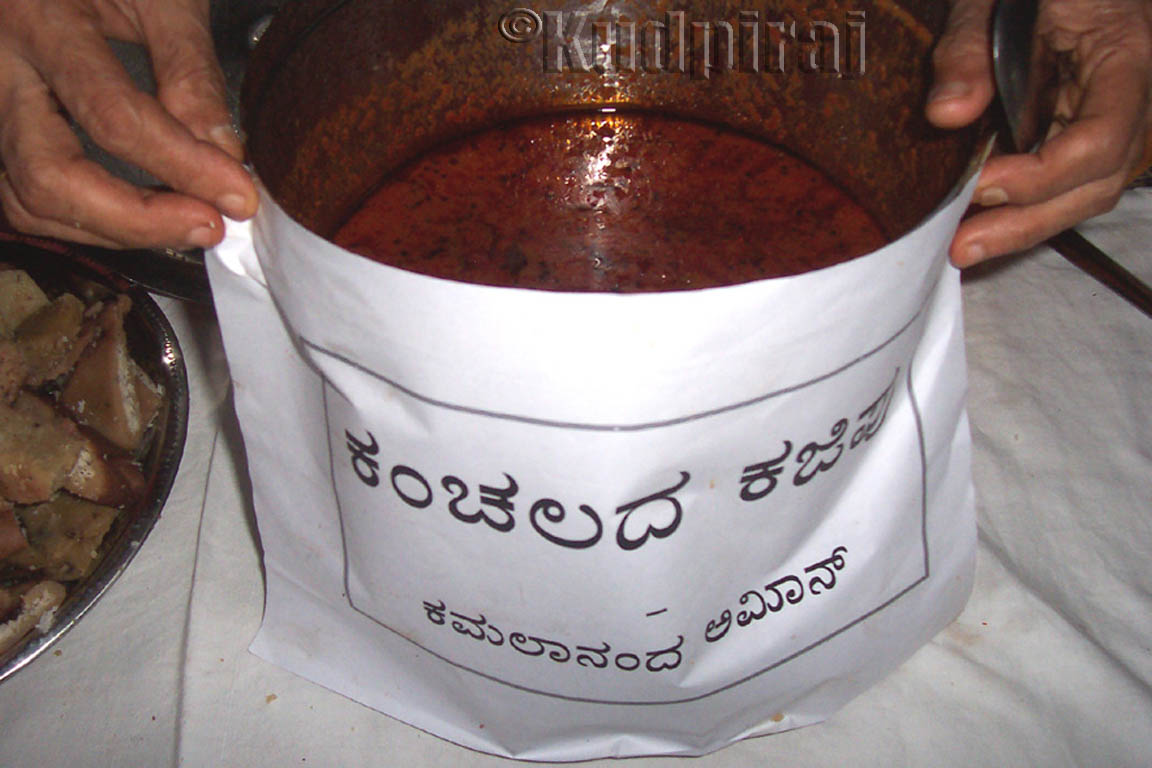
Food specialties included Aritha Pundi, Gujjeda Happala, Thevuda Chutney, Kudutha Saar, Thetlada Kajipu, Uppad Kukkuda Chutney, Nurge Thoppu Ambade, Kudutha Chutney, Kanile Padenji Ghasi, Thekkareda Adye, Pathrode, Manjal Iretha Gatti, Saarnadye, Kanchalada Kajipu, Pelakaayida Gatti, Pelakaayida Gaari, Mambala and a variety of Kashayas that tickle the taste buds of connoisseurs.


Enthusiastic Ladies Group prepares and presents the ‘Aati’ food specialties. The two consecutive years of Aatidonji Dina went by fast enough but the taste of goodies that we tasted there linger on forever!

LinkWithin

Related Posts Plugin for WordPress, Blogger...

Image Copy Control